
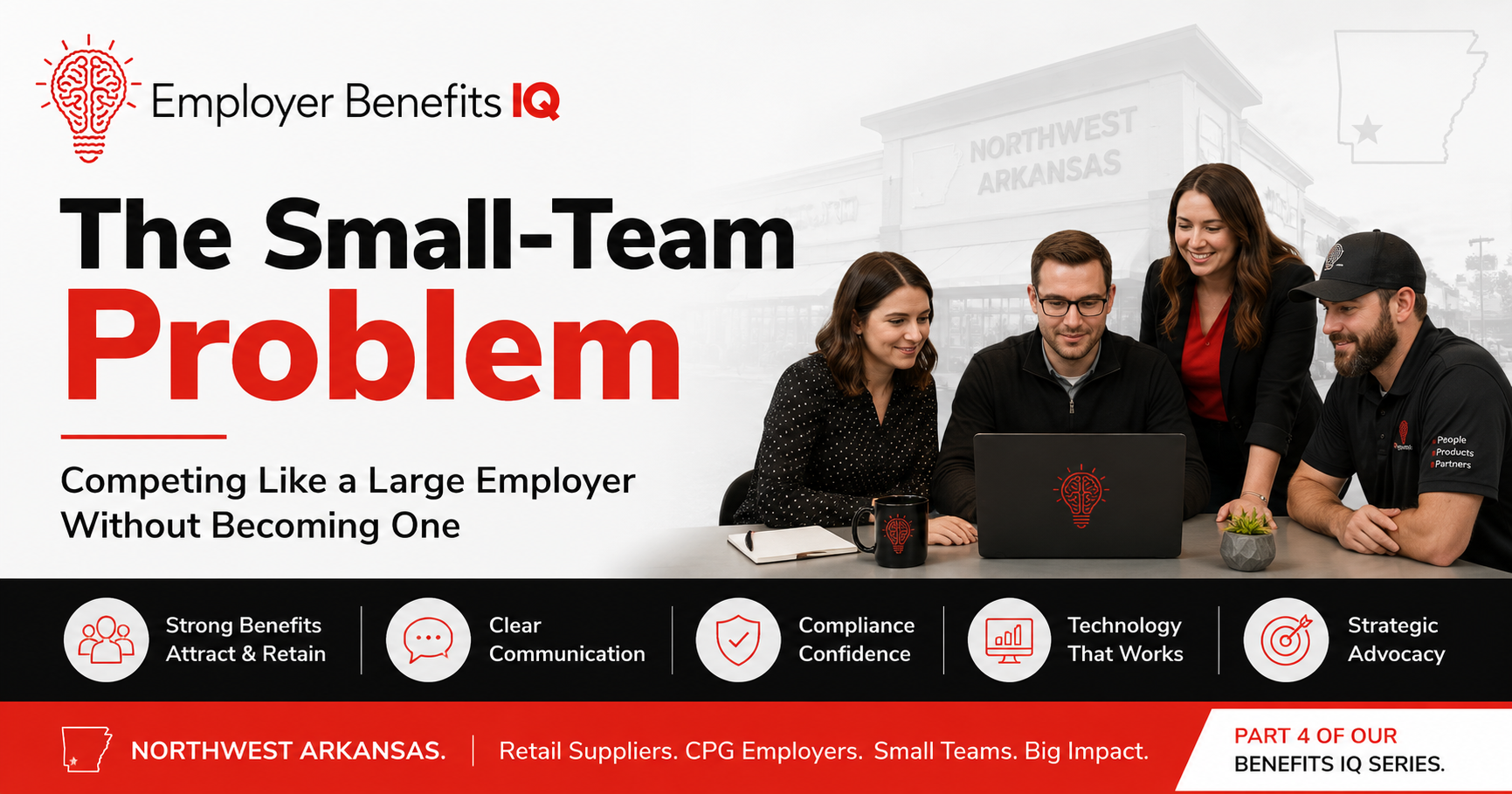
Part 4 — The Small-Team Problem: Competing Like a Large Employer Without Becoming One
One thing I see all the time in the Northwest Arkansas retail supplier community is a company that has grown into a pretty sophisticated business without ever…
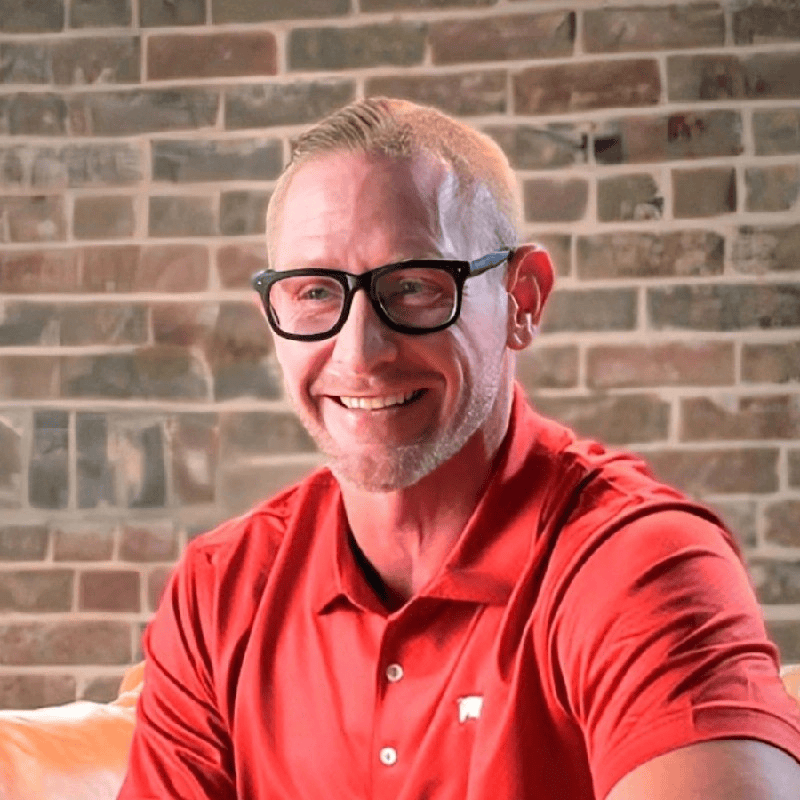
VP of Employee Benefits · BHC Insurance · Independent Benefits Consultant
One thing I see all the time in the Northwest Arkansas retail supplier community is a company that has grown into a pretty sophisticated business without ever building a large HR infrastructure around it. That is not necessarily a bad thing. Most of these companies did not grow because they were trying to build a huge internal benefits or HR department. They grew because they were good at serving Walmart or Sam’s Club, managing the supply chain, understanding the category, building relationships, and executing for the customer.
The challenge is that the expectations placed on HR keep growing whether the HR team grows or not.
A 100-person CPG supplier may have one HR leader responsible for recruiting, onboarding, payroll, employee benefits, compliance, employee relations, performance management, culture, leave administration, open enrollment, terminations, vendor management, and every employee question that comes in during the day. In some organizations, that same person also helps with office management, finance, operations, or whatever else needs attention.
At the same time, employees in that company aren't grading their experience on a curve because the organization is smaller. They may be comparing their benefits, technology, support, communication, and overall employee experience to Walmart, a national CPG company, a technology firm, or another employer with a much larger HR department.
That creates a very real problem for smaller suppliers. How do you provide employees with the kind of support and experience they expect without building a massive internal team and adding even more overhead?
I do not think the answer is simply hiring more people every time the benefits program becomes more complicated. I think the better answer is deciding what HR should actually own, where outside resources can do the work better, where technology can reduce administration, and where employees should have access to someone other than HR when they need help.
That last part matters more than most employers realize.
If an employee has an MRI denied, gets a medical bill they don't understand, cannot figure out whether a prescription is covered, or is trying to find an in-network provider, the HR director probably shouldn't be the person handling the entire problem. Employees absolutely need help, but that help should come from someone who understands healthcare claims, billing, networks, pharmacy, and eligibility and can actually work the issue through to resolution.
That is where employee advocacy can make a smaller benefits program feel much bigger than it really is.
A good advocacy model gives employees somewhere to go when healthcare becomes confusing. Instead of every question landing back on HR, employees have access to someone who can help them navigate claims, resolve billing issues, understand coverage, work through pharmacy problems, and find the right resources.
It improves the employee experience, but it also gives HR time back.
Another benefit of that model gets overlooked. Employees should not have to explain the details of a medical issue to someone they work with just because they need help using the health plan. Giving them access to a dedicated advocate creates a cleaner line between benefits support and the employer.
I have always thought this is one of the easiest ways a smaller organization can compete with a much larger one. Employees are not impressed because you have fifteen logos on a benefits presentation. They remember what happened when they had a problem. Did somebody answer the phone? Did somebody help? Did the issue actually get fixed?
That experience matters.
Benefits communication is another area where smaller employers can do a lot better without spending a lot more money.
Most companies spend an enormous amount on healthcare and employee benefits, then try to explain it all during one open enrollment meeting. Employees sit through a presentation, make their elections, and six months later barely remember half of what was covered.
Healthcare is simply too expensive and too complicated to communicate once a year.
Employees need information when it is relevant to them. They need to know where to go for primary care, when telemedicine makes sense, where they can get lower-cost imaging, how their prescription benefit works, what mental health resources are available, and who to call when something goes wrong.
That does not mean sending another benefits email every week. Most employees already receive too many emails.
It means having a simple communication plan throughout the year.
January may be a good time to explain how the deductible resets and what that actually means. Spring may be a good time to focus on preventive care. Before summer, you may want to remind people about urgent care, telemedicine, and the difference between those options and the emergency room. Later in the year, you can begin preparing employees for open enrollment instead of dropping everything on them two weeks before elections are due.
Smaller suppliers actually have an advantage here because communication can be more personal. You can bring someone onsite. You can meet with a department. You can answer questions directly. You can tailor communication to the workforce instead of sending something written for 40,000 employees in every state.
That personal approach can make a benefits program feel much more valuable, even when the underlying benefits haven't changed.
Technology can help, but employers need to be careful about assuming every new platform creates efficiency. Sometimes it does. Sometimes it just gives HR another username and password to remember.
The real question is whether the technology removes work and makes the employee experience easier.
If HR still has to manually fix eligibility every month, the technology is not doing enough. If payroll deductions and carrier enrollments constantly get out of sync, something is broken. If employees still have to call HR because they cannot find basic benefit information, the platform has not solved the problem.
Technology should make the process easier in the background. Enrollment, payroll, eligibility, communication, and reporting should work together without requiring the HR team to become a full-time systems administrator.
The same thing applies to benefits vendors.
It is incredibly easy to add programs. One vendor introduces a wellness tool. Somebody else offers telemedicine. The PBM has a specialty pharmacy program. Then you add a mental health solution, a musculoskeletal vendor, a second-opinion service, diabetes management, care navigation, fertility support, and another employee assistance resource.
Before long, the company has many programs and very little employee understanding.
More vendors do not automatically create a better benefits strategy. In fact, too many disconnected vendors can make the experience worse.
Employees should not have to figure out which company handles which part of their healthcare.
I would rather see a company offer five resources that are well integrated, well communicated, and heavily used than fifteen programs nobody understands.
Every vendor should solve a real problem. Employers should know what it costs, how employees use it, how it works with the health plan, who is responsible for managing it, and what value it creates. If nobody can answer those questions, I would probably start asking why the program is still there.
This is one reason I think smaller employers need a very different relationship with their benefits advisor than the traditional once-a-year renewal model.
I do not believe an HR leader at a 150-person supplier should be expected to become an expert in every area of healthcare. They do not need to understand every PBM pricing structure, every stop-loss contract provision, every compliance requirement, every network issue, and every new cost-containment strategy.
They need access to people who do.
If the broker's primary role is shopping insurance once a year, the employer is still left carrying most of the workload for the other eleven months. I think the advisor should be helping with strategy, claims issues, vendor management, compliance, employee education, benchmarking, financial analysis, renewal planning, and long-term decision-making throughout the year.
There should be a plan for the year, not a panic sixty days before renewal.
That becomes even more important for smaller companies because they have less room for administrative chaos. A large employer may have a benefits manager, an HRIS team, a compliance department, a compensation group, employee communications staff, and several outside consultants.
A 100-person supplier may have one HR leader trying to keep all of those plates spinning.
The system around that person has to work.
Compliance is a perfect example. Employee benefits compliance is not getting simpler. ACA requirements, ERISA, COBRA, HIPAA, Section 125, mental health parity, plan documents, prescription drug reporting, disclosures, fiduciary responsibilities, and other requirements continue to create work.
It is unrealistic to expect a small HR team to remember every deadline and every rule on its own.
There should be a process. Who owns each filing? Which notices have to go out? Are the plan documents current? Does the Summary Plan Description actually match the plan? Are vendor agreements being reviewed? Are required disclosures being completed?
That should live on a calendar and in a process, not in somebody's memory.
Open enrollment deserves the same level of attention because it strongly influences how employees perceive the benefits program. If the process feels rushed, rates are changing at the last minute, communication is confusing, and employees cannot get answers, they are going to assume the benefits program is disorganized even if the actual plan is pretty good.
A smaller company can create a very professional enrollment experience with good planning, clear materials, strong education, individual support, and technology that actually works.
The employee does not care how many people were working behind the scenes. They care whether the process was easy.
That is really the bigger point.
Employees experience outcomes. They do not experience your organizational chart.
They do not care whether the person fixing a claim works for the broker, the TPA, or a separate advocacy company. They care that somebody helped them.
They do not care which software company built the enrollment system. They care that their elections went through correctly.
They do not care who manages compliance. They care that their coverage is there when they need it.
That creates a real opportunity for smaller suppliers because you do not need to own every capability internally. You just need to make sure it all feels coordinated from the employee's perspective.
I think a lot of smaller companies sell themselves short here. They assume they cannot provide the same level of experience as a large employer because they cannot afford the same internal resources.
I do not agree.
A 125-person supplier doesn't need Walmart's HR department. It needs an operating model built for 125 people.
In some ways, that can actually be better. Smaller companies can be more personal, more responsive, and more flexible. Leadership can be accessible. Decisions can move quickly. Employees can actually know who is helping them instead of becoming another ticket in a system.
The goal is not to look big. The goal is to operate well.
Operating well means HR spends time on the things only HR can really do. It means employees know where to get help. It means vendors are coordinated instead of operating in separate silos. It means communication happens throughout the year. It means technology removes administrative work instead of adding it. It means compliance has a process. It means the benefits advisor is involved throughout the year, not just during renewal.
It also means leadership has access to useful information.
A CFO should not have to become a PBM expert to know whether the pharmacy contract is competitive. A president should not need to spend hours reading stop-loss language just to understand what the company is buying. An HR director should not spend half a day helping someone compare medical bills.
Those people should have access to specialists who can take complicated information and turn it into a decision.
That is what good outside support should do.
One exercise I think is worth doing is looking at how HR actually spends its time.
How many hours each week go into claims questions, eligibility issues, billing problems, vendor follow-up, compliance tracking, or fixing enrollment errors? How often do employees come to HR because they simply do not know where else to go?
If the HR leader spends ten hours a week on insurance administration, that is ten hours not spent on recruiting, retention, culture, employee development, workforce planning, or helping managers.
That has a real cost, even if it never appears on an invoice.
Complexity has a cost too.
Every new benefit, vendor, and program creates work somewhere. Someone has to implement it, explain it, reconcile eligibility, review invoices, answer employee questions, and eventually decide whether the thing worked.
That does not mean employers should avoid innovation. It means they should be disciplined about what they add.
Before adding another program, I would want to know what problem it solves, how many employees are likely to use it, how it fits with the rest of the benefits strategy, who is responsible for it, how success will be measured, and what happens if it does not deliver.
If those answers are unclear, adding another vendor probably is not the answer.
This becomes even more important as smaller and middle-market employers begin exploring self-funding, captives, transparent PBMs, direct primary care, alternative networks, care navigation, and other strategies designed to create more control over healthcare spending.
Those strategies can be extremely effective, but more control usually means more responsibility.
Self-funding without good reporting, vendor management, compliance, advocacy, and financial oversight can create headaches. A captive without a clear long-term strategy can simply become another insurance arrangement. A transparent PBM contract is only useful if somebody actually understands and manages it.
The strategy is only as good as the structure supporting it.
That is why I do not think the first question should be whether the company needs a captive, should self-fund, or should change PBMs.
I would start with what the company is actually trying to solve.
Are healthcare costs too volatile? Are employees struggling to access care? Is pharmacy spending the issue? Does leadership want more transparency? Is the HR team overwhelmed? Are employees frustrated with the current experience? Is the company trying to become more competitive in recruiting?
Once those questions are clear, it becomes much easier to decide what belongs in the solution.
Northwest Arkansas retail suppliers do not have the luxury of adding complexity just because something sounds innovative. The strategy has to work in the real world. It has to work for the CFO, HR, the employee, and the person trying to use the health plan when something actually goes wrong.
That is ultimately how smaller companies compete.
They do not have to copy large employers. In many cases, they should not.
They can be faster, more personal, and more responsive. They can communicate better. They can give people easier access to leadership. They can create a benefits experience that feels much less bureaucratic.
Those are real advantages.
The mistake is letting all of that get buried because the HR team is consumed by administration.
If I were sitting with the leadership team of a Northwest Arkansas supplier, I would not start by asking how many people work in HR. I would ask whether the HR team is spending its time on the things that create the most value.
If the answer is no, then I would start looking at the system around them.
What can be automated? What should be outsourced? Where do employees need advocacy? Which vendors should be consolidated? What should the benefits advisor be responsible for? What information does leadership actually need? Where are things falling through the cracks because ownership is unclear?
That is usually where the opportunity is.
Smaller employers do not need to become large employers to compete for talent. They need to become easy places to work.
Employees should know where to get help. Benefits should make sense. Enrollment should work. Healthcare problems should get resolved. Leadership should be accessible. HR should have time to focus on people, not paperwork.
When those things work, employees notice.
And when the companies competing for your people do not do those things well, it becomes a real competitive advantage.
The goal is not to build the biggest benefits department in Northwest Arkansas.
It is to build a benefits and HR operating model that performs like one.
Coming Next: Part 5 — Building the High-Performing Retail Supplier Benefits Strategy
In the final article in this series, I am going to bring all of this together and look at what I believe a high-performing benefits strategy should actually look like for a Northwest Arkansas CPG or retail supplier.
That means connecting healthcare financing, employee benefits, recruiting, retention, communication, vendor management, data, employee support, and long-term planning instead of treating each of them like a separate conversation.
The companies that get this right will not necessarily be the ones spending the most money. They will be the companies that understand what they are trying to accomplish, know where their money is going, build the right support around their people, and make better decisions year after year.
That is what a benefits strategy should do.
Questions about this topic? I'm available for consulting engagements across Northwest Arkansas and beyond.
About the Author
Corry Hull, REBC®, CSFS®
VP of Employee Benefits · BHC Insurance
Corry Hull, REBC® CSFS®, is VP of Employee Benefits at BHC Insurance and the founder of Employer Benefits IQ (www.employerbenefitsiq.com). He is a Certified Health Rosetta Advisor — one of fewer than 200 nationwide — and a multi-year presenter at United Benefit Advisors (UBA) national conferences. He specializes in self-funded health plan design, PBM contract strategy, stop-loss structuring, group medical captives, and ACA/ERISA compliance for mid-market employers. His work has been recognized by Health Rosetta (Rosie Award, 2026), UBA (Producer Peak Performer, 2025–2024), and BHC Insurance (Producer of the Year, 2021–2025). His employer-education content has been referenced in BenefitsPro and cited within the Health Rosetta advisor community. All consulting and brokerage compensation is fully disclosed.